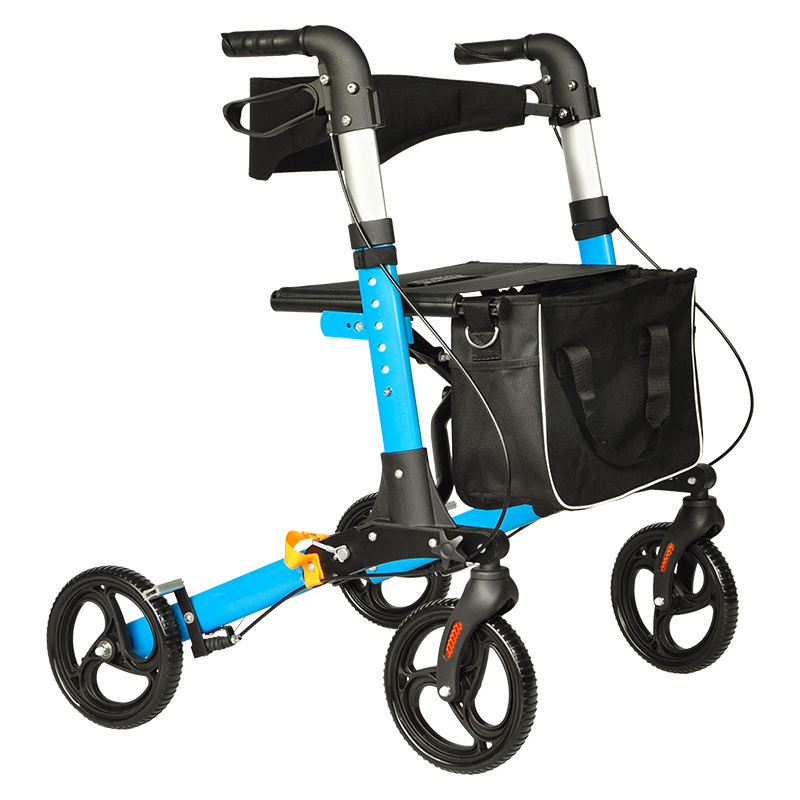
Choosing the right 4-wheel rollator for seniors starts with understanding the user’s mobility needs, walking environment, and comfort requirements. A rollator walker provides walking support and often includes a built-in seat, hand brakes, a storage bag, and a folding frame.
However, different models offer different features, weight capacities, and levels of convenience. Whether you are selecting a rollator for personal use or sourcing mobility aids for your business, it is important to compare the key specifications before making a decision.
In this guide, we explain how to choose the right rollator by comparing weight capacity, seat height, brakes, wheel size, frame material, and folding design.
What Is a 4-Wheel Rollator for Seniors?
A 4-wheel rollator is a walking aid designed for people who can walk but need additional support while moving. Unlike a traditional walker that may need to be lifted or repositioned with each step, a rollator moves on wheels.
Most four-wheel rollators include:
- Four wheels for smooth movement
- Hand-operated brakes for speed control and parking
- A built-in seat for resting during walks
- Ergonomic handles for a comfortable grip
- A storage bag or basket for personal belongings
- A folding frame for convenient storage and transportation
For seniors who can walk independently but need occasional support and rest breaks, a four-wheel rollator may be a practical mobility solution.
However, people with significant balance problems or difficulty controlling a wheeled walking aid should consult a healthcare professional to determine whether a different type of walker would be more appropriate.
How to Choose the Best 4-Wheel Rollator for Seniors
1. Check the Weight Capacity
Weight capacity is one of the most important factors when choosing a 4-wheel rollator for seniors.
Different models support different user weights. Always check the manufacturer’s stated maximum user weight and select a model that accommodates the intended user.
Consider the following factors:
- Maximum user weight: Confirm that the rated capacity is appropriate for the user.
- Frame strength: Check the construction and overall stability.
- Product testing: Ask the supplier about relevant load and durability testing.
- Safety requirements: Follow the manufacturer’s weight limits and instructions.
For distributors and wholesalers, offering several weight-capacity options can help meet the needs of different customer groups.
For users who require a higher load capacity, a heavy-duty rollator walker may be worth considering. Always confirm the specifications of the selected model before ordering.
2. Choose the Right Seat Height
A rollator walker with a seat allows users to take breaks when they become tired. However, the seat must be at a suitable height.
If the seat is too high, the user’s feet may not rest comfortably on the floor. If it is too low, standing up may become more difficult.
When evaluating seat height, consider:
- Whether the user’s feet can rest flat on the floor while seated
- Whether the user can sit down and stand up comfortably
- Seat width and depth
- Cushioning and surface material
Check the manufacturer’s seat dimensions rather than relying on the overall frame height.
For users who plan to rest frequently while walking, seat comfort should be an important part of the selection process.
3. Look for Reliable Hand Brakes
Brakes are essential for controlling a four-wheel rollator, especially when stopping to rest.
Most rollators have hand brakes that can slow the wheels and lock them in place when the user is seated.
Before choosing a model, check these features:
- Easy-to-use brake levers: The user should be able to operate them comfortably.
- Parking brake function: The wheels should remain locked when the user sits down.
- Brake accessibility: The handles should suit the user’s hand strength and grip.
- Maintenance requirements: Brake adjustment and replacement should be straightforward.
Users with reduced hand strength may find some brake designs difficult to operate. Testing the brakes before regular use is recommended.
Always engage the parking brakes before sitting on the rollator. Never sit on it while it is moving.
For additional guidance on reducing fall risks, read the National Institute on Aging’s recommendations for falls and falls prevention.
4. Consider the Best Wheel Size for a 4-Wheel Rollator
Wheel size affects how a rollator handles different surfaces. The best choice depends on where the user expects to use it most often.
Small and medium wheels
These can be suitable for indoor environments and relatively smooth surfaces. They may also help keep the overall product compact.
Larger wheels
Larger wheels may roll more easily over minor surface irregularities and can be suitable for some outdoor environments.
However, wheel size alone does not determine performance. Tire material, wheel design, frame geometry, and overall construction also matter.
If the user plans to walk outdoors regularly, consider a model designed for both indoor and outdoor use. Avoid steep, slippery, or uneven terrain beyond the product’s intended conditions.
5. Lightweight 4-Wheel Rollator: Aluminum vs. Steel
A lightweight 4-wheel rollator can be easier to maneuver, fold, and transport. Frame material is one factor that affects overall weight and durability.
Common options include:
- Aluminum rollators: Often chosen for their relatively low weight and ease of handling.
- Steel rollators: Often selected for their robust construction and potential cost advantages.
The best material depends on the product design, required load capacity, intended use, and target price.
For users who need to place the rollator in a car or store it in a small space, overall product weight is particularly important.
You can explore the RINEO rollators and walking aids range to compare available product options.
6. Choosing a Folding Rollator for Seniors
A folding rollator walker is easier to store when not in use and may be more convenient for travel.
Before purchasing, check:
- Whether the frame folds easily
- Whether the folded dimensions suit the available storage space
- Whether the product is manageable during transportation
- Whether the frame locks securely in its operating position
- Whether the storage bag can be accessed conveniently
A compact folding design can be particularly useful for seniors living in apartments or users who frequently travel by car.
For customers prioritizing portability, a lightweight folding rollator walker may be a suitable option, depending on its specifications and intended use.
7. Adjustable Handle Height for Senior Rollator Walkers
Handle height affects posture, comfort, and control. Ideally, the handles should be adjustable to suit the user’s height and support a comfortable standing position.
When selecting a rollator, check:
- The minimum and maximum handle heights
- The adjustment mechanism
- Handle grip material and shape
- Whether both handles can be adjusted securely
The user should be able to stand upright without excessive bending or reaching. A healthcare professional can help determine an appropriate fit, particularly for people with existing mobility limitations.
8. Comfort Features to Look for in a Senior Rollator
Additional features can make a rollator more practical for daily activities.
Useful features may include:
- A removable storage bag or basket
- A padded seat and backrest
- Ergonomic hand grips
- Reflective details for visibility
- A compact folding mechanism
- Replaceable or serviceable components
Not every user needs every accessory. Focus on features that support the user’s daily routine rather than choosing a model based on accessories alone.
For example, a person who regularly visits shops may value storage space, while someone who mainly uses a rollator indoors may prioritize a compact frame and easy maneuverability.
How to Select a Rollator for Different Needs
Before making a final decision, compare the user’s mobility needs with the product’s specifications.
| Selection factor | What to check |
|---|---|
| Weight capacity | Maximum rated user weight |
| Seat height | Comfortable sitting and standing |
| Brakes | Easy operation and secure parking |
| Wheels | Suitability for indoor or outdoor surfaces |
| Frame material | Weight, durability, and maintenance |
| Folding design | Folded dimensions and storage convenience |
| Handle height | Adjustment range and comfortable posture |
| Accessories | Seat, backrest, bag, and other useful features |
A good rollator should match the user’s physical needs, walking environment, and daily activities. The best choice is not necessarily the model with the most features, but the one the user can operate safely and comfortably.
What Should Distributors Look for When Sourcing 4-Wheel Rollators?
For mobility equipment distributors, wholesalers, and healthcare product suppliers, product selection also involves commercial considerations.
When evaluating a rollator manufacturer or supplier, consider the following:
- Product range: Different frame styles, sizes, colors, and weight capacities.
- Quality control: Consistent manufacturing standards and documented product testing.
- Customization: Available OEM and ODM options, subject to supplier capabilities.
- Supply capacity: Production lead times and the ability to support repeat orders.
- Documentation: Applicable test reports, certifications, labeling, and market-specific compliance documents.
- After-sales support: Availability of replacement parts and technical assistance.
Request current specifications and supporting documentation before placing an order. Regulatory requirements vary by market and product classification, so buyers should verify the requirements applicable to their intended sales region.
A supplier with a well-organized product range can help distributors serve different customer segments while simplifying product selection and replenishment.
Frequently Asked Questions
Is a 4-Wheel Rollator Suitable for All Seniors?
No. A four-wheel rollator may suit seniors who can walk but need support and occasional rest breaks. People with significant balance difficulties or limited ability to control a wheeled device may need a different mobility aid. A healthcare professional can help assess suitability.
Is a 3-Wheel or 4-Wheel Rollator Better?
A three-wheel rollator is often more compact and maneuverable in tight spaces. A four-wheel rollator typically offers a seat and may provide a more convenient option for users who need frequent rest breaks. The best choice depends on the user’s balance, environment, and intended use.
What Is the Difference Between an Aluminum and a Steel Rollator?
Aluminum rollators are often lighter and easier to transport, while steel rollators are commonly chosen for their robust construction and cost considerations. Actual weight, strength, and durability depend on the specific design and materials.
Can a Rollator Be Used Outdoors?
Some rollators are suitable for outdoor use on relatively smooth paths. Check the manufacturer’s intended-use instructions, wheel design, and brake performance before using a rollator outdoors. Avoid steep, slippery, or uneven terrain unless the product is specifically designed for those conditions.
What Should Wholesalers Check Before Ordering Rollators?
Wholesalers should compare specifications, rated capacity, product quality, applicable compliance documents, packaging, minimum order quantities, lead times, spare parts, and after-sales support. Evaluating product samples can help confirm whether a model meets the needs of the target market.
Explore RINEO Rollators and Mobility Solutions
Choosing the right 4-wheel rollator for seniors means comparing the features that matter most, including weight capacity, seat height, brakes, wheel design, and folding convenience.
RINEO provides mobility and daily living product solutions for distributors, wholesalers, and healthcare partners. If you are sourcing rollator walkers for your product range, explore our rollators and walking aids or contact our team to discuss your requirements.
Looking for rollators for your market? Contact RINEO to request product specifications, available configurations, and wholesale information.
Please confirm product specifications, certifications, and available configurations with our team before ordering.