Choosing a walker is not about finding the most expensive model. It is about finding the right mobility aid that matches the user’s current physical abilities. The wrong walking frame can reduce stability, cause discomfort, and even increase the risk of falls.
This guide covers the key factors to consider when buying a walker for seniors, a rollator walker, or a folding walker for daily use. It also answers common questions like how to choose a walker for elderly parents and what is the difference between a walker and a rollator.
1. Match the Walker Type to Physical Ability
There is a fundamental trade-off in mobility aid design: the more stable the walker, the more effort it takes to move; the easier it rolls, the more balance the user needs.
Standard Walkers (No Wheels)
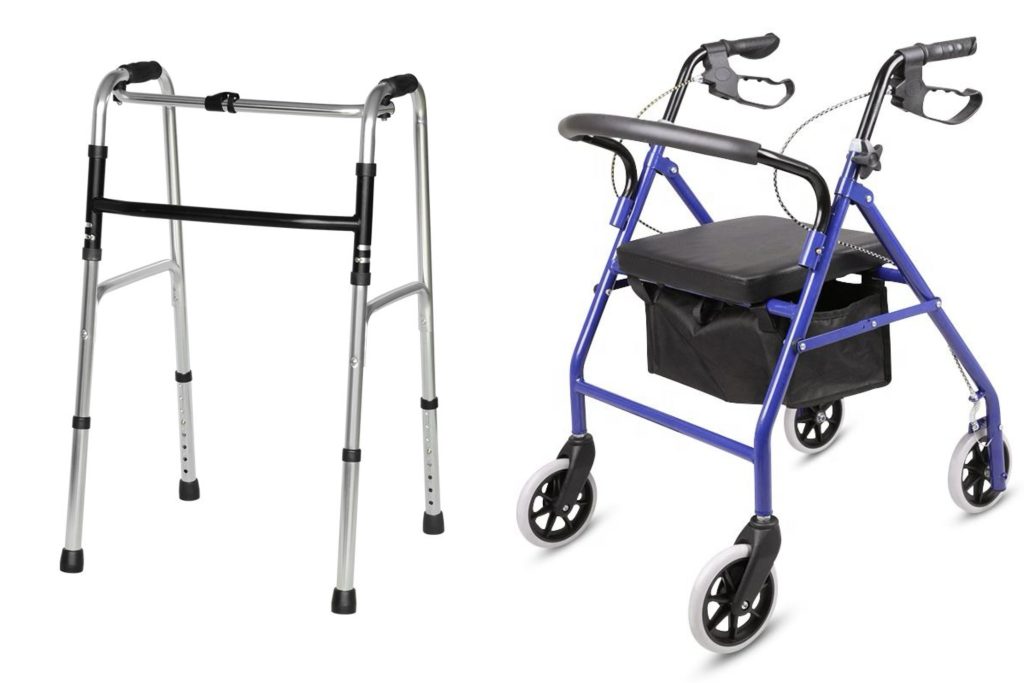
- Best for: Users with poor balance but adequate upper body strength who need maximum stability. Ideal as a post-surgery walker or a walker for elderly after hip replacement, primarily for indoor use.
- Keep in mind: The user must lift the entire walking frame to move forward. This requires arm strength and results in slow movement.
Two-Wheel Walkers (Front Wheels, Rear Glides)
- Best for: Users with weak legs but acceptable balance who find lifting a standard walker difficult. This two-wheel walker only requires tilting the rear legs forward. A good option for seniors with balance problems who still have some arm strength.
- Keep in mind: Slightly less stable than a no-wheel walker but more stable than a four-wheel rollator.
Four-Wheel Rollators (with Seat)
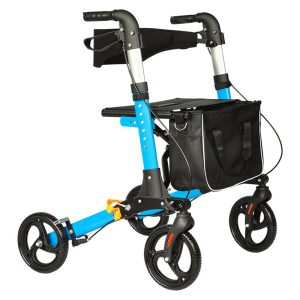
- Best for: Seniors who can walk independently but have limited endurance and need to sit and rest frequently. A rollator with seat is often more readily accepted than a cane or crutch. Look for a rollator with seat and brakes for outdoor use if the user goes outside regularly.
- Keep in mind: The least stable option and prone to rolling away. Sensitive brakes are essential, and the user must have enough grip strength to operate them. A lightweight rollator with ergonomic handles makes control easier.
2. Height Adjustment Is a Safety Issue
Incorrect height causes shoulder and neck strain and can shift the user’s center of gravity, leading to instability.
- Quick check: Have the user stand naturally in their usual shoes with arms hanging down. The top of the walker handles should be level with the crease on the inside of the wrist. When gripping, the elbows should maintain a comfortable bend of about 15 degrees.
- Reverse check: If the adjustable handles are too low, the user will hunch over. If too high, they will shrug. Both postures increase fall risk. For taller users, look for an adjustable walker for tall person with extended height range.
3. What to Check Before Buying a Walker for Elderly Parents
Online shopping does not allow you to test-roll a mobility walker. Whenever possible, bring the user to a physical store, or choose a platform with easy returns. Once you have the product, verify the following:
- Brakes are non-negotiable. For wheeled walkers, squeeze the brakes firmly and try to push the walker forward. The wheels must not move at all. If the brake system is hard to grip or requires more hand strength than the user has, return it. Look for loop lock brakes or push-down brakes for added safety.
- Wheels should match the terrain. Small caster wheels are more maneuverable on indoor tile and wood floors. If the user frequently goes outdoors over curbs or brick paths, large wheels offer noticeably better shock absorption and curb clearance. Consider an all-terrain rollator for outdoor use.
- Check for wobble. When testing, feel for any looseness in the aluminum frame or steel frame. Poor-quality connections create a “floating” sensation that undermines confidence and safety.
- Weight and folding. If the walker needs to be transported frequently, choose a lightweight folding walker or collapsible rollator made of aluminum rather than steel. A folding walker that fits in a car trunk is essential for travel. Test the folding mechanism by hand to ensure it operates smoothly with one hand and locks securely.
4. Two Overlooked Factors: Acceptance and Safe Use
- Acceptance matters. Many seniors resist walkers for elderly users because of the psychological message that “using a walker means I’m old and disabled.” Reframe it as a walking partner or mobility rollator. Choose an understated color, and add a walker basket or walker bag for personal items. Acceptance improves dramatically.
- Safety rules. Walkers are not designed for use on stairs. Before sitting down on a rollator with seat, always lock the parking brakes and confirm the walker is stable.
5. Popular Walker Categories at a Glance
| Walker Type | Best Use Case | Key Feature |
|---|---|---|
| Standard walker | Indoor, post-surgery | Maximum stability |
| Two-wheel walker | Indoor/outdoor, weak legs | Easier to push |
| Rollator with seat | Outdoor, low endurance | Built-in seat and brakes |
| Lightweight folding walker | Travel, car transport | Portable and easy to store |
| All-terrain rollator | Outdoor, uneven surfaces | Large wheels, suspension |
| Bariatric walker | Higher weight capacity | Reinforced frame |
| Walker for Parkinson’s patients | Tremor and freezing support | Weighted frame, motion lock |
6. Frequently Asked Questions
What is the difference between a walker and a rollator?
A standard walker must be lifted to move forward and offers maximum stability. A rollator has four wheels, often a seat and hand brakes, and rolls continuously. Rollators suit users who need to rest frequently; standard walkers suit users with severe balance issues.
When should someone start using a walker?
Consider a walker for seniors when walking causes fatigue, balance becomes unreliable, or a doctor recommends it after surgery or a fall. A physical therapist can assess whether a walker or rollator is more appropriate.
How do I choose a walker for elderly parents?
Start with their balance and arm strength. Poor balance plus good arm strength points to a standard walker. Weak legs but okay balance points to a two-wheel walker. Low endurance and outdoor needs point to a rollator with seat. Always adjust handle height and test the brakes before buying.
Are walkers covered by Medicare or insurance?
In many regions, walkers may be partially covered with a doctor’s prescription. Check local insurance and Medicare policies, and confirm whether the model is classified as durable medical equipment (DME).
Final Thoughts
The right walker is one that the user will actually use, safely and consistently. Focus on matching the mobility aid to the person’s abilities, adjust the handle height correctly, and verify the brakes and frame before committing.
If you are unsure which walker or rollator suits your situation, our team is happy to help you compare options based on indoor or outdoor use, balance level, and budget.