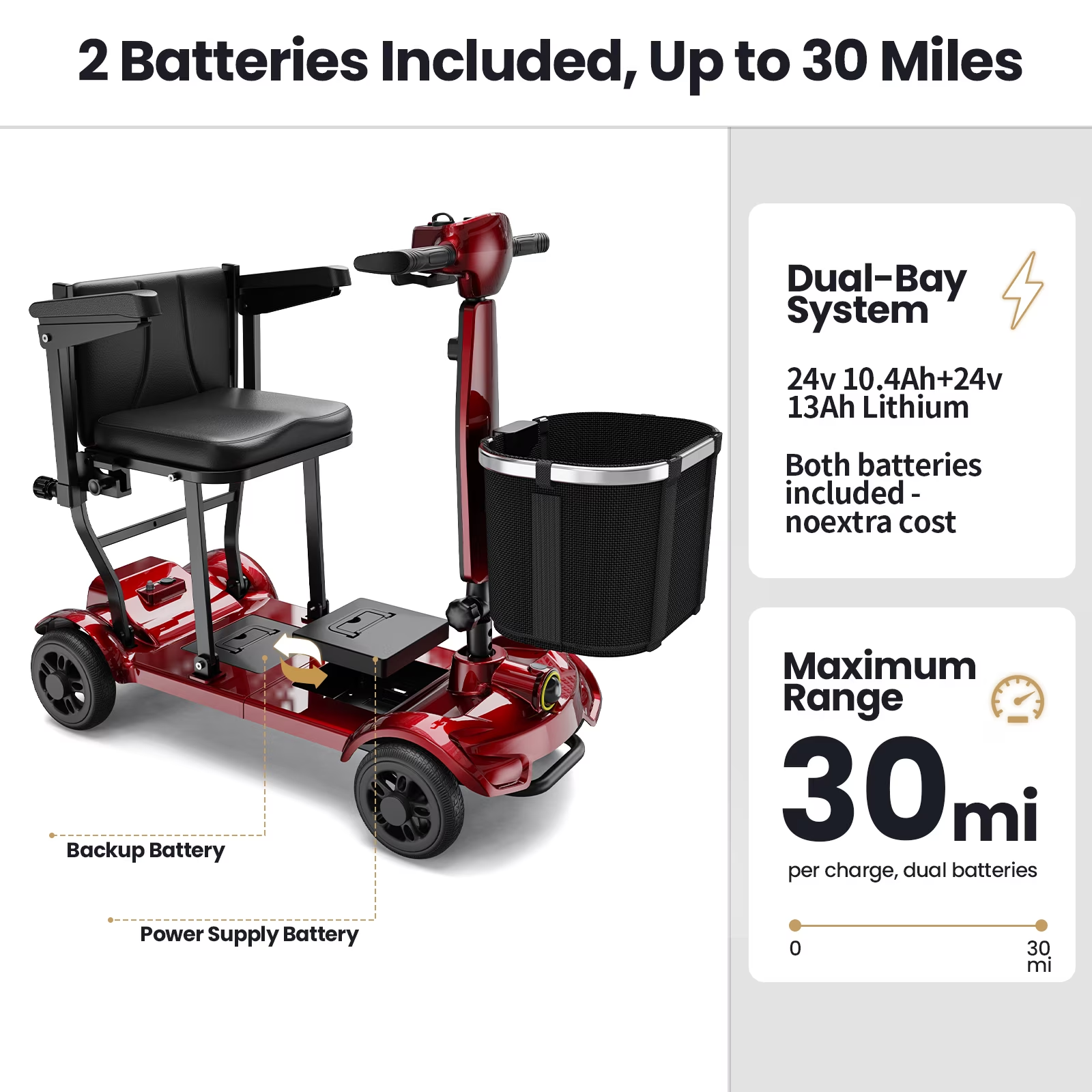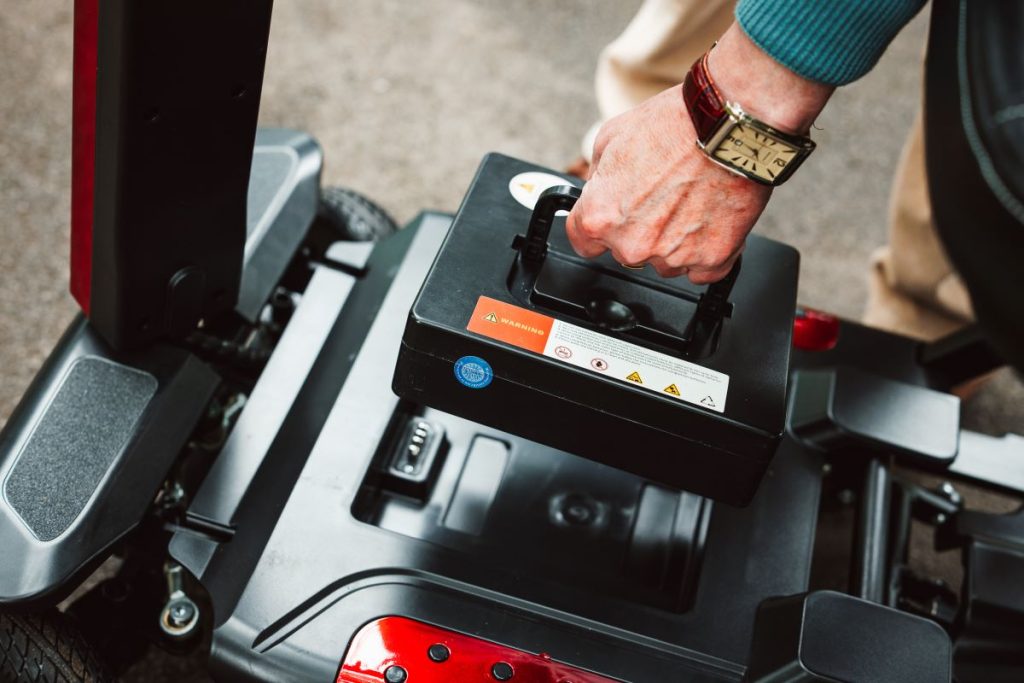
Effective mobility scooter battery maintenance starts with knowing what powers your scooter—the battery is the most expensive and most overlooked component of any mobility scooter. A well-maintained mobility scooter battery can reliably serve for 2 to 3 years. Poor charging habits, by contrast, can cause significant capacity loss in as little as 12 months. Today, the vast majority of senior mobility scooters use either lead acid batteries or lithium batteries. Whichever type you have, the seven mobility scooter battery maintenance tips below will help you maximize battery performance and reduce the risk of unexpected power loss.
1. Know Your Mobility Scooter Battery Type First
The mobility scooter batteries used in most senior scooters fall into two categories: lead acid and lithium. Lead acid batteries are heavier and cheaper. They typically power larger scooters with longer run times. Lithium batteries are lighter and more compact, making them the common choice for portable, folding models. Browse folding mobility scooters →
The most important difference lies in charging logic. You can safely leave lead acid batteries charging overnight—modern smart chargers stop output automatically once the battery is full. Lithium batteries, however, should be disconnected once fully charged, as prolonged float charging accelerates aging. Keep in mind that lead acid and lithium charging systems are completely incompatible. Mixing chargers can directly damage the battery and even create safety risks.
2. The First 20 Uses of a New Mobility Scooter Battery Determine Its Lifespan
Many people install a new mobility scooter battery and find the range falls short of expectations, leading them to suspect battery quality. In reality, lead acid batteries need a “break-in period”—over the first 15 to 20 charge cycles, capacity gradually climbs to its rated value.
The right approach during this period is to charge immediately after every use, no matter how little power you used. Even if you only rode for ten minutes, plug in the charger. This allows the chemicals inside the battery to fully activate and lays the foundation for stable performance later. Skip this step, and the battery may never reach its best capacity. Lithium batteries have no such break-in requirement—normal use and opportunistic charging are fine.
3. Don’t Wait Until Empty—But Don’t Overcharge Either
When it comes to mobility scooter battery maintenance and charging, the most common myth is “drain it completely, then recharge.” Deep discharge is especially damaging to lead acid batteries: a single full drain can reduce capacity by 15% to 20%, and a few repetitions can essentially ruin the battery (Battery University). The correct strategy is shallow charging and shallow discharging—start charging once the battery drops to around half, and avoid going below 30%. Lithium batteries should likewise avoid prolonged use below 20% charge.
On the other hand, longer charging isn’t better. Lead acid batteries typically need 8 to 12 hours for a full charge, while lithium batteries usually reach full in 3 to 5 hours. Although smart chargers have overcharge protection, keeping a battery at full voltage for extended periods still accelerates aging—and this is one of the main causes of battery swelling.
4. Use Only Original or Certified Mobility Scooter Battery Chargers
This is the one rule you cannot compromise on in mobility scooter battery maintenance. Different batteries have completely different charging curves: lead acid batteries require three-stage charging (constant current—constant voltage—float), while lithium batteries rely on a dedicated BMS. Using a car battery charger or an off-brand charger on a scooter battery can leave it undercharged and reduce capacity. At worst, it may cause swelling or even fire.
If your original charger fails, contact the scooter manufacturer or an authorized dealer for a matching model. The few dollars saved on a cheap replacement rarely cover the cost of a new battery.
5. Temperature Is a Silent Killer
Mobility scooter batteries are extremely sensitive to temperature. In high heat (above 35°C), capacity can permanently drop by 20% to 30%. In low temperatures (below 0°C), range may temporarily shrink by 30% to 50%. Charging a lithium battery in the cold can also produce lithium dendrites—a hidden risk of internal short circuits.
During summer, avoid parking the scooter in direct sunlight, and never leave it inside a closed vehicle. Charge in a well-ventilated indoor space away from heat sources. In winter, if you store the scooter in an unheated garage or storage room, remove the battery and bring it indoors. Wait until it returns to room temperature before charging. The ideal storage and charging temperature is 15 to 25°C.
6. Mobility Scooter Battery Storage: Full for Lead Acid, Half for Lithium
If you won’t be using the scooter for several months, storage method depends on battery type. You must store lead acid batteries fully charged, with a top-up every 15 to 20 days. A fully charged lead acid battery in good conditions can hold its charge for up to six months—but leave it to self-discharge, and it may never recharge again.
Lithium batteries are the opposite: for long-term storage, keep them at 40% to 60% charge rather than fully charged. Storing at full charge accelerates aging of the cathode material and shortens cycle life. With either type, disconnect the battery from the scooter before storage and choose a dry, cool location.
7. Don’t Ignore Tire Pressure and Terminals
One detail few people mention: under-inflated tires can increase rolling resistance by more than 30%. The motor then draws more current to maintain speed. The battery then has to discharge under sustained high load, and aging nearly doubles. Spending one minute a month checking tire pressure is one of the most cost-effective mobility scooter battery care habits you can adopt.
Also, regularly check whether the battery terminals are loose or corroded. Wipe the charging port and terminal surfaces with a dry cloth to prevent oxidation-related poor contact. If you spot white or blue-green corrosion on the terminals, clean gently with a baking soda solution and dry thoroughly. Should the battery ever swell, leak, or overheat abnormally during charging, stop using it immediately and contact a professional technician.
Summary: Good mobility scooter battery maintenance comes down to four habits: avoid deep discharge, charge after every use, use a matching charger, and control temperature. Get these habits right, and your battery will reliably serve out its expected years. If you have any concerns about your battery’s condition, contact an authorized service provider for a professional inspection—rather than regretting it when you’re stranded mid-journey.